
Hot Tapping Services
- Live branch connections, up to 12″
- TSSA QA-03336 certified
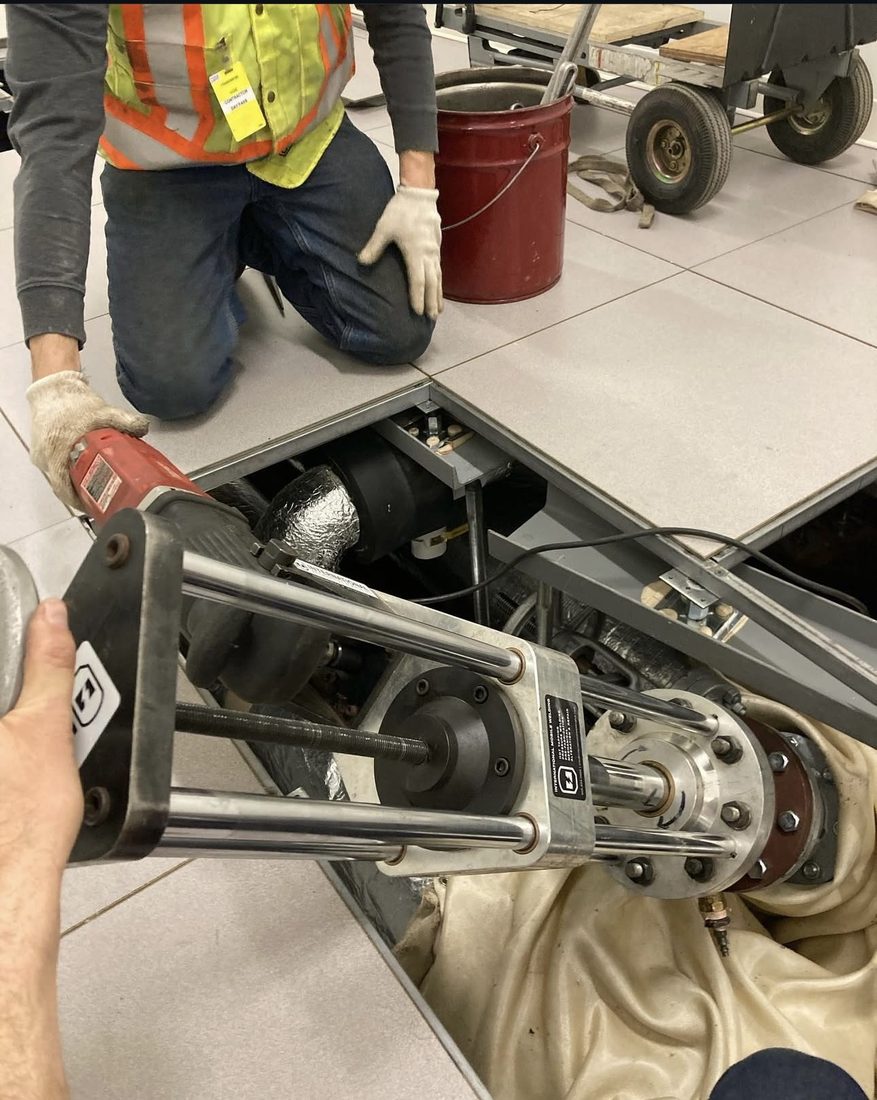
Line stopping temporarily isolates a section of pressurized, in-service pipe so that work can be carried out beyond the stop — without draining the system, without a plant shutdown, and without waiting on a valve that may not exist or may not hold. A fitting is welded to the live pipe, a hot tap is made through it, and a stopping head is inserted and expanded to block flow. When the work is done the head is withdrawn, the fitting is capped, and the line returns to service.
IMW is certified for line stopping under TSSA certificate QA-03336 — the same authorization that covers our hot tapping work — shop and field, in sizes up to 12″. Most of what we do day to day is hot tapping; if your problem is isolation rather than connection, talk to us about the system and we will tell you honestly whether a line stop is the right approach and whether we are the right people to do it.
Related techniques, often performed on the same job, answering different questions.
| Hot tapping | Line stopping | |
|---|---|---|
| What it does | Creates a new permanent branch connection into a live pipe | Temporarily blocks flow so work can be done beyond the stop |
| Why you would do it | You need to connect something new — a branch, valve, meter or instrument | You need to work on existing pipe that cannot be isolated any other way |
| End state | The tap stays and becomes part of the system | The stopping head is removed; the fitting stays and is capped |
| Typical trigger | Expansion, new equipment, added metering | Repair, replacement, valve installation, re-route |
Every line stop begins with a hot tap — the stopping head has to get into the pipe somehow. But most hot taps are not line stops. More on hot tapping.
Yes — that is the purpose of the technique. The system stays pressurized and in service upstream of the stop while the isolated section is worked on.
Up to 12″. Whether a particular line is a candidate depends on its service, pressure, condition and access — send the details and we will tell you.
No. The isolation is temporary. The fitting welded to the line is permanent and is capped when the head is withdrawn, which usually means a future stop at the same point is faster and cheaper than the first one.
Line stops on live natural gas piping are routine work when performed under the right authorization with qualified procedures and qualified welders. IMW holds TSSA QA-03336 together with a TSSA Fuels Contractor Registration. See gas piping.
Yes. Line stopping requires a TSSA authorization separate from general pressure piping installation. IMW holds it — QA-03336, shop and field. See our certifications.
Yes, and a line stop is frequently how it is done. We stop the line, cut in a valve, and remove the stop — leaving you with permanent isolation for every future job on that system.
Work we are usually asked about alongside line stopping.
Describe the system and the constraint. If a line stop fits, we will say so; if it does not, we will say that too.